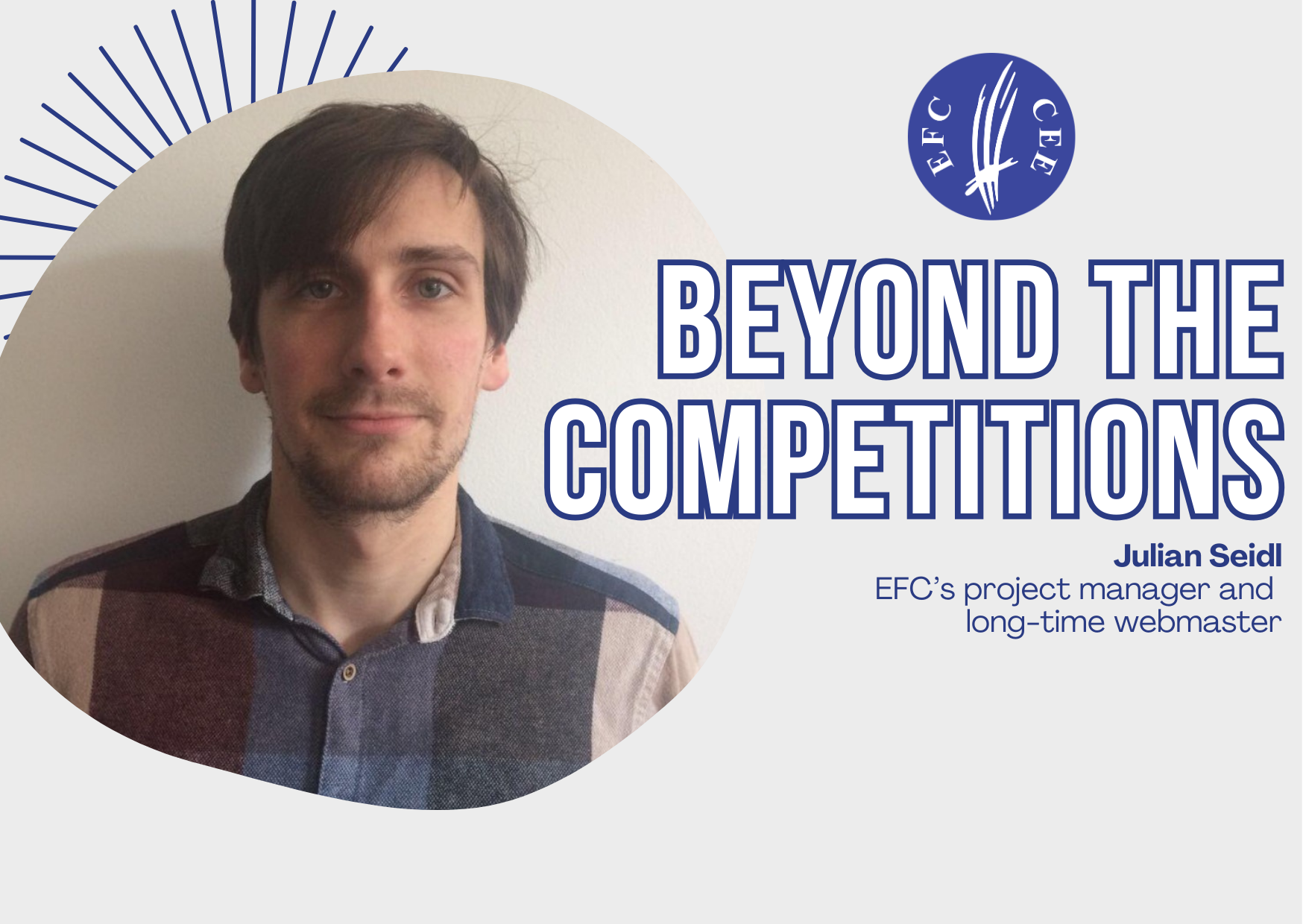
Julian Seidl on the EFC’s website transformation and what it means for the community
As part of the European Fencing Confederation’s broader strategy to modernise its digital infrastructure, a major website redesign is now officially underway. Following the public call for proposals, we sat down with Julian Seidl—EFC’s project manager and long-time webmaster—for an exclusive insight into the vision and priorities behind this ambitious project.
“The new platform must offer a seamless user experience,” Seidl begins, highlighting the practical foundations of the redesign. Live results, rankings, athlete profiles, and an event calendar are not just desirable features—they are central. Around these, a robust content management system, GDPR-compliant user handling, and smooth backend connectivity will form the technical backbone of the new site. All of this, wrapped in a mobile-first, accessible design that supports multiple languages.
Crucially, Seidl emphasises the importance of a close working relationship between the chosen developer and the internal EFC team. “This isn’t just a one-off delivery,” he explains. “We expect constant dialogue, sprint-based reviews, and joint decisions. The site needs to reflect how the confederation actually works.”
When asked about benchmarks, Seidl refers to digital platforms like World Athletics and FIE—websites that combine real-time data with intuitive navigation and a strong visual identity. These examples help shape the EFC’s vision of a site that balances function and form.
Among the most exciting innovations on the roadmap are real-time updates, RSVP-enabled calendars, and dynamic analytics integration. Seidl also hints at potential extras, like user accounts, notifications, and feedback tools—all designed to enhance engagement with the fencing community.
Of course, innovation brings complexity. One of the project’s key challenges will be integrating modern frontend technologies with the existing backend systems while keeping the CMS intuitive for users without technical expertise. For Seidl, this balance between flexibility and simplicity is non-negotiable.
On a daily level, athletes can look forward to personalised access to schedules, results, and official documents, while federation administrators will benefit from streamlined tools to manage news, documents, and licences through a central CMS.
Looking beyond the launch, vendor support remains a top priority. Seidl outlines clear expectations: “We’ll need thorough documentation, hands-on training for our staff, and a solid maintenance agreement to ensure the platform remains scalable and secure as our needs evolve.”
Finally, Seidl confirms that the fencing community will have a voice in this transformation. From surveys and beta testing to direct feedback channels on the platform, the project aims to stay as participative as it is progressive.
With timelines in place and vision clearly defined, the EFC’s digital future is taking shape—step by step, and with the entire community in mind.